Narmada through Legends and History
Rishi Markandey, in a sense, is the ancient sage most identified with Narmada. He is said to have been a witness to the seven Pralayas (cataclysmic dissolutions) in all of which Narmada retained her individual existence and identity. He has also been, as mentioned before, the first one to have done the Parikrama. This is evident from the great details of hundreds of spots on both bank of Narmada that he alludes to in his dialogues in the Purana. He is, in this sense, the first chronicler of the pre-history and legends of Narmadakhand.
Scriptures and ancient texts have numerous allusions to Narmada. From time immemorial, Narmada has attracted Sadhakas (spiritual practitioners) and Siddha-Purushas (the enlightened ones.) The Narmadakhand has been blessed to be a host to a galaxy of saints and sages. It is said that many great sages of the yore like Sanak, Sanatkumar, Sanandan, Sanatan, Atri, Anusuya, Narada, Valmiki, Vyasa, Shukdev, Gautama, Kapil, Kashyap, Yagyavalkya, Pippalad, Kardam among several others practiced Tapasya on the bank of Narmada.
Narmada had attracted most characters of Ramayana also. Sri Ramachandra visited Narmadakhand and worshipped Shiva at Rameswaram on its bank in Gujarat (different from the more famous Rameshwaram in the south which is a Jyotirlinga.) There are also places associated with Sri Lakshmana and Sri Hanuman. Meghnad, the son of Ravana, too did Tapasya on the bank of Narmada and there is a Meghnad Teertha on the Narmada bank in western Madhya Pradesh.
Kartavirya Arjun (also known as Sahasrabahu (the thousand-armed) was an eminent ruler of the Haiheya dynasty that ruled large parts of India in the Treta-Yuga. He had great blessings of Shiva and was considered invincible. Once Ravana worshipped Shiva near Mahishmati (most likely the town of Maheshwar but some think it could be Mandla too.) His worship was disturbed by Kartavirya when the latter with his thousand arms tried to block the flow of Narmada in a playful way. As a result of this Narmada forged ahead in a thousand streams – the spot came to be known as Sahasradhara. Incidentally, there is a place by this name both near Mandla and Maheshwar and that adds to the confusion regarding the authentic location of Mahishmati. A furious Ravana, whose flowers and other paraphernalia of worship had all got swept away in the stream, stormed Kartavirya but was no match for him. Kartavirya made him a prisoner and it was only at the behest of Ravana’s grandfather, the venerated sage Pulatsya, that Kartavirya released Ravana.
In a separate episode Kartavirya Arjun was charmed by the divine cow Kamadhenu Surabhi, at Rishi Jamdagni’s ashram at Nemawar and took it away by force despite the Rishi’s remonstrance. Later Kartavavirya’s sons killed Jamdagni. When the great Rishi’s son, Sri Parashuram, came to know of this, he vowed to slay all the Kshatriyas and make the earth free of them. It is said that he slayed twenty-one generations of Kshatriyas. He is said to have then washed his axe of blood in the waters of Narmada.
Sri Parshuram is said to have born in the Narmadakhand in the hillock of Janapav near Mhow-Indore. Later his father Jamdagni and mother Renuka Devi lived in their ashram at Nemawar in present day Dewas district (about 125 kilometres from Indore.) There is a temple dedicated to Renuka Devi in Nemawar village. About 5 kilometres upstream of Nemawar is the village Turnal, where Sri Parashuram did his rituals; this place is considered greatly significant for Shraddha and allied ceremonies for one’s ancestors.
The Srimad Bhagawatam speaks of the battle between Devas and Asuras that was fought on the bank of Narmada.
ततः सुराणामसुरैः रणः परमद्रारुणः ।
त्रेतामुखे नर्मदायामभवत् प्रथमे युगे ।।
Similarly, it is mentioned that the battle between Sri Krishna and Rukma (Rukmini’s brother) was fought on Narmada bank.
The Mauryans, Shungas, Guptas and Harshavardhana
The Narmadakhand has been a witness to the vicissitudes of Indian history for thousands of years. For very long periods of time it virtually served as the geographical, and therefore, political, boundary between the north and the south, and there were only few phases that stood as exceptions when a kingdom or empire could breech this natural boundary and have equal control over both the northern and peninsular India.
The Purana describes Amarkantak, the origin of the Narmada, as being located in the western periphery of the Kalinga country and therefore it reasonable to assume that for a considerable period it was part of the Kalinga kingdom (which did not just mean present day Odisha which often taken as its synonym but at various times whole of present day Chhattisgarh and parts of eastern MP.) The great Kalinga hero Kharvela had conquered larger part of the subcontinent during the high noon of the Kalinga regime, even winning back Magadh from the Mauryans and glorified that in Khandgiri at Bhubaneswar, a phase of history usually passed over in school level history textbooks.
While there is little doubt that the Mauryans since Ashoka’s time had controlled large parts of the subcontinent, particularly north of Narmada, their dominance had considerably diminished by the time of the ninth and last Mauryan ruler Brihadratha, who in 185 BCE, had been killed by Shunga king Pusyamitra who later also defeated the Greeks under Demetrius who had been expanding their domain from Bactria in north-western frontier region. Pusyamitra’s son Agnimitra who ruled from the ancient town of Vidisha (35 miles from Bhopal) had also built a fort on the bank of Narmada. These details are presented in Kalidas’s first play ‘Malavika-Agnimitram’, a five-act play which tells the fascination of Agnimitra with an exiled servant-girl named Malavika.
After the Shunga empire, the Narmadakhand witnessed the rule of the Guptas. The great Kalidas who lived in the Gupta period made several allusions in his oeuvre to Narmada. After the Gupta period, during the time of Harshavardhana, the leading literary figure at his court, Banabhatta, has described the social and cultural aspects of Narmadakhand in an insightful way. Banabhatta, it is said was born in a village in Shahdol district and the dam Bansagar on the river Son in Shahdol and Umariya districts is named after him. In his celebrated text Harsh-Charita, he has described the poverty and deprivations of the forest-dwelling people in Narmadakhand in a poignant manner. It is striking that on reading it one might think those conditions are not dissimilar to that of the present-day tribal population in the region – even after the passage of 1400 years. Dr. Ayodhya Prasad Dwivedi, in his highly erudite work ‘Narmada – Sanskriti Srotasvini’ has given powerful excerpts from Banabhatt’s work relating this.
Harsha who had wished to extend his empire south of Narmada failed to do so when he was thwarted in his campaign by the Chalukya ruler Pulakeshin II in the battle that took place in 620s CE. Thus Narmada not only continued to be an important factor in determining political boundaries but also drew boundary lines that limited the ambitions of some of the mightiest sovereigns in Indian history.
The Kalchuris era
Perhaps the most important period in the political history of Narmadakhand came during the Kalchuri era. This era itself is marked with a discontinuity and is studied in two distinct phases with a gap of more than a century in between. We first know of the Kalchuris of Mahishmati and later the Kalchuris of Tripuri. Later there were short-lived and minor branches like that of Kalchuris of Ratanpur in Chhattisgarh who established a major Devi temple at Ratanpur, which is still visited by thousands of people. Later from Ratanpur they shifted their capital a little southward to a village called Raipur, which continued to develop and is now thriving city that serves as the capital of Chhattisgarh.
The earliest Kalchuri clan ruled from Mahishmati (most likely Maheshwar in Khargone district of Madhya Pradesh, though there are scholars and also popular opinion that Mandla in eastern Madhya Pradesh was the Mahishmati that acted as the base of the Kalchuris. Three prominent rulers of this lineage were Krishnaraja, Shankargana and Buddharaja. After Buddharaja, this dynasty appears to have faded into insignificance, quite possibly because of subjugation by the Chalukyas and also flourishing of other kingdoms like the Parmars in western Narmadakhand.
Much more, in comparison, is known about Kalchuris of Tripuri. There is no dispute with regard to the location of Tripuri. It is about ten miles west of Jabalpur (also known as Tevar) where there is a prominent temple of Devi Tripurasundari. It was also the venue of the controversial 1939 session of the National Congress where Subhaschandra Bose presided for the second time after the previous year’s Haripura session, much to the chagrin of the Gandhians.
Though the beginnings of this dynasty are not very clear, still, Vamadev is considered to be its first notable ruler who placed this regime on firm footing. There were other eminent successors like Yuvrajadev under whose patronage the great poet of the age Rajshekhar, the composer of texts like ‘Bal Ramayana’ and ‘Bal Bharat’ stayed. Yuvrajdev constructed the famous ‘Chausath Yogini Temple’ at Bhedaghat – which is only a few miles west of Tripuri. Another ruler worth mentioning is Gangeyadev. The last important ruler from Tripuri was Karnadev who constructed the architecturally remarkable Shiva temples in Amarkantak. However, after their period of glory was over by the end of the eleventh century when they had almost faded into insignificance.
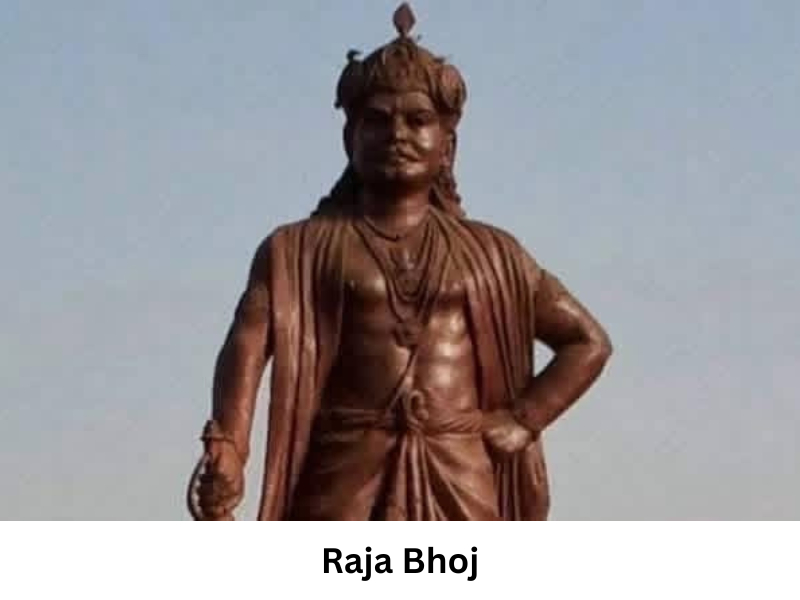
Almost around the times of Kalchuris of Tripuri an important and powerful kingdom emerged with its base in the Malwa plateau region. They were the Parmars who ruled from their seat at Dhar – then called Dharanagari, a town 60 km south-west of Indore. Sindhuraj had his kingdom spread across a considerable part of Narmadakhand. During his time, the poet Parimal Gupta (also referred to as Padma Gupta,) wrote his noted and much acclaimed work ‘Navsahasank Charit,’ a work of imagination mixing facts and fantasy, pertaining to the love and ensuing marriage between Sindhuraja and Shashiprabha. It is replete with evocative descriptions of Narmada who herself is a character in this work.
Sindhurja seems to be quite a capable ruler but the most famous Parmar ruler was Sindhuraj’s son Bhoj, who in addition to his high abilities in statecraft, was also a scholar of no mean achievement, and had authored a large number of works of literature and scholarship. He created a great seat of Sanskrit learning in Dhar called the Bhojshala.
Unfortunately, in recent times, the place which has a temple and also a mosque, and is now under Archaeological Survey of India, has been a witness to communal tension on account of competing claims of both Muslims and Hindus. In order to avoid any conflicts, the matter has now been provisionally settled in a rather unconventional though functional way – on Tuesdays only Hindus are allowed to worship while on Fridays only the Muslims. On other days it is open to all for visit with an entry fee of one rupee, perhaps lowest anywhere in India. There is a Saraswati idol in Bhojshala precincts and the Hindus also observe the Saraswati Puja on the Vasanta Panchami Day. When the Vasanta Panchami falls on a Friday then the situation becomes tensed with chances of a communal flare up, and administration has a tough task of maintaining law and order on their hands.
Raja Bhoj also constructed many temples elsewhere in his territory, including the famous Bhojeshwara Shiva temple at the village of Bhojpur on the bank of the river Betwa, about 27 km from Bhopal. It has a huge Shiva-Linga and is also under the Archaeological Survey of India. Due to some historical reasons, it has not been an active place of worship but an important monument of a bygone era and visited by a large number of people everyday.
Bhoj is also credited to have constructed several dams and one of the largest man-made lakes in the country – the upper lake (locally called the ‘Bada Talaab’) of Bhopal. The city itself, it is said, gets its name from Bhoj, probably derived from Bhojpal (being nurtured by Bhoj.) The airport at Bhopal is named after Raja Bhoj.
One interesting proverb, popular till this day, is ‘Kahan Raja Bhoj, kahan Gangu Teli’ which means how does one compare Raja Bhoj with Gangu Teli. It is usually understood that Gangu Teli is a commoner who of course cannot stand in comparison to the great and multi-faceted king. But Dinesh Choudhary, the author of ‘Shaharnama Jabalpur’ has advanced a comical origin of this proverb. He says that the Kalchuri king Gangeyadev and the Chalukya royal Telanga had together launched a campaign against Bhoj and still got defeated. Thus the admirers of Bhoj mocked the the duo for this misadventure by creating this proverb – Gangeyadev became Gangu, and Telanga became Teli.
The splendid fort-town of Mandavgarh that acted as the southern gateway to the Malwa witnessed numerous regimes and power intrigues that changed the ownership of the place. At different times it had been under the control of Harshavardhan, the Parmars of Dhar, the Khiljis and their chieftains, Humayun and Shershah, and a stable period under the Mughals from Akbar to Aurangzeb. The Mughals were displaced by Bajirao Peshwa I and for nearly a century Mandu was under the Maratha control. Their dominance finally ended after they lost to the British in 1818.
The Garha Gond or the Gondwana
The eastern parts of Narmadakhand had a different historical career chiefly because they were not much influenced by the early Muslim regimes and retained their autonomy. After the long phases of Kalchuri rule in the first millennium, the later periods, particularly after the thirteenth century, saw these parts ruled with notable efficiency by the Gond rulers and the regime was generally called the Garha Gond or Gondwana.
The ruling class of the Gonds, or the Rajgonds as they were called, emerged and created strong kingdoms at various times. Four of them are usually mentioned. The most important in spread and administrative prowess was the kingdom of Garha (also known as Garha Mandla or Garha Katanga). Another was Gonds of Chanda, present day Chandrapur in Maharashtra. Two comparatively short-lived and minor kingdoms were that of Gonds of Kherla (which controlled areas of present day Betul district in Madhya Pradesh) and the Gonds of Deogarh in Nagpur-Chhindwara region.
The initial part of the Narmada trajectory – particularly the districts of Dindori, Mandla, and Jabalpur were for long years the key region of the thriving Garha state which, at the peak of its glory, commanded 52 forts (Garh) in central India. It was ruled at various times from Madan Mahal (now in Jabalpur city and having a railway station with the name), Mandla, Ramnagar, and Singaurgarh.
The founder of Garha kingdom was Jadurai (or also called Jadorai or Yadorai) who is said to have served in the Kalchuri court of Tripuri but later forged his own sovereignty. It took quite a few generations to expand and reached its pinnacle under Sangram Shah. But the most famous ruler in this line is the daughter-in-law of Sangram Shah – the illustrious Durgawati.
Durgawati was born in the Chandel clan of Mahoba in the Bundelkhand region of present-day Uttar Pradesh and got married to Dalpat Shah, the adopted son of Sangram Shah.
Widowed at a young age, when her young son Veer Narayan had not yet come of age, she was a great heroic figure and deserves to be known and celebrated in a much better way by present-day Indians. She ruled, at various times, from the forts of Singaurgarh in Sagar district and Chauragarh in Narsingpur district. She had put up a great front against Akbar in 1564 when the latter was at the peak of his expansionist drive but her limited troops did not stand much chance against the mighty Mughal forces. She chose to have an honourable death rather than falling in hands of the enemies, and staring at the certain defeat she took a dagger from her Mahawat (the elephant-rider) ending her life. This happened at a place called Narrai (not far from Jabalpur) and there is small well-maintained memorial there to honour her valour.
Later the Mughals reinstalled a Gond prince in the region, thereafter making him and his successors their feudatories, while maintaining their suzerainty, as was a common practice of the Mughal administration.
Durgawati’s memory has been honoured in several ways – the Jabalpur University is named after her, an Indian Coastguards vessel as also a long-distance train between Jabalpur and Jammu-Tawi bears her name.
Between Mandla and Dindori, on the northern bank is located the old fort of Ramnagar, which has several inscriptions where the glory of Rani Durgawati is highlighted. It was built by the Gond king of the area in the seventeenth century, Hridayshah. He too was not a sovereign ruler but a vassal under the larger Mughal empire.
During the high noon of the Maratha period the various Rajgond kingdoms either became feudatories or came directly under them. When the British finally won the region from the Marathas they organised the major part of it into different administrative zones which were later merged into form the Central Provinces (and still later Central Provinces and Berar) with capital at Nagpur.
Some chieftains of Gondwana continued in a smaller fashion, remaining feudatories to the British, till the union of the native states with the British India in and after 1947.
The Gonds have rich folklore and had a heroic history second to none. That they were strong administrators too is manifest in the glorious period of the Garha State. The emblem of the Garha state was a lion getting better of an elephant in a duel. At present a political party called Gondwana Gantratik Party has come up and has some influence across this belt. Their chief demand is the creation of a separate state of Gondwana which would cover parts of MP, Maharashtra, Chhattisgarh, and even Odisha and Telangana. They too have adopted the emblem of the Garha state as their party symbol.
Narmadakhand in the anti-colonial struggle
The central and western Narmadakhand were very much a region of action in the great uprising of 1857. The British cantonment of Mhow near Indore (where a few decades later was born the great B.R. Ambedkar after whom the town has now been renamed) saw the Indian troops rise in rebellion. Tantia Tope, a hero of the great uprising of 1857, also, it is said, wandered long months in the forests of Vindhyas and Satpuras of the Narmadakhand. He was caught in 1859 and hanged in the town of Shivpuri.
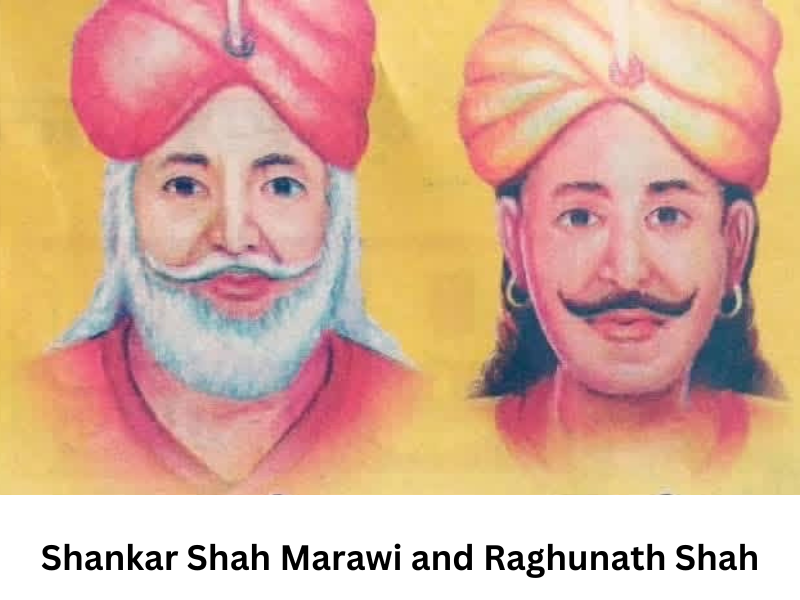
One great father-son duo, unfortunately not much known widely known, were the Gond ruler Shankar Shah Marawi and his son Raghunath Shah, who, during the uprising of 1857 organised local landlords as well as commoners against the oppressive colonial rule. The immediate provocation, it is said, were the atrocities committed by the British regiment stationed at Jabalpur under its commander Leige Clark. However their plan got known to the establishment through some spies and Shankar Shah along with his son Raghunath Shah were killed by cannon mouth blow, a common way of execution by the British colonialists during the time.
Another heroic figure of Avantibai of Dindori who too got martyred during the 1857 uprising. She had valiantly fought the British in the rebellion of 1857 and died a martyr’s death at the age of 27. A project of the Bargi dam between Mandla and Jabalpur is named Avanti Sagar in her honour.
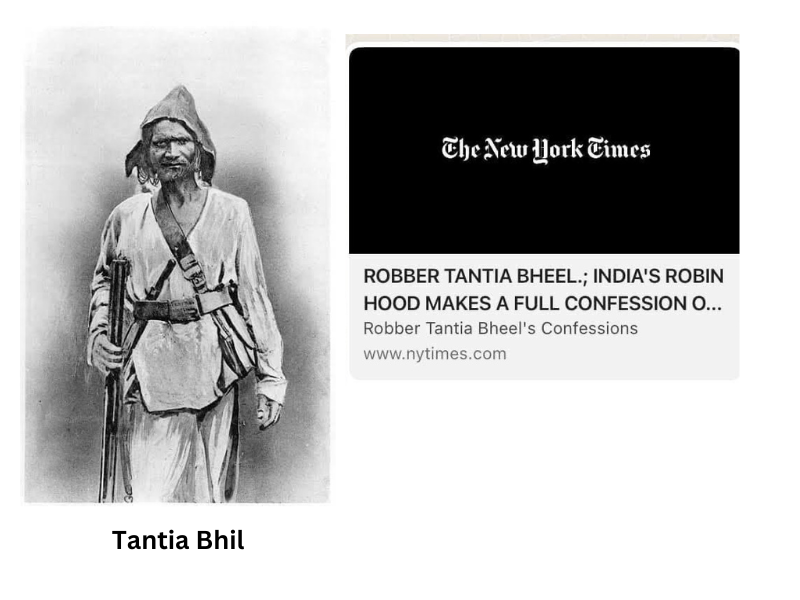
A great local hero of the western Narmadakhand was Tantiya Bhil, whose capture was reported in the New York Times of 10th November 1889 where he was mentioned as Indian Robinhood. Tantia, born in the Pandhana tehsil of Khandwa district, was a victim of exploitative taxation practices of the British as well as the local Zamindar and left with little choice finally rose to rebel. He was first incarcerated for a year but following his release, he strove to organise a more sizeable front and began plundering exploitative Zamindars , Police Stations, and other citadels of power, and thus, comprehensively challenging the might of an exploitative system. No wonder, he had become a thorn in their flesh. Tantia and his group distributed whatever they plundered from the exploiters among poor Bhils. The Bhil women considered him as their brother and he was popularly known as ‘Mama’ by the young people in the region.
Due to the treachery of one of his own persons he was caught and tried at Sessions Court at Jabalpur and hanged. Fearing an uprising the news was kept under covers with his body thrown in the Vindhyas, south of Indore at a place called Patalpani, quite near to Barwah and Omkareshwar. His Samadhi-sthal, place of final repose, is still a much revered place in the area and it is said that there has been a long tradition of train drivers stopping at this place and placing incense sticks at the spot before they go down the Vindhyas towards Narmada at Barwah. Sister Nivedita, the Scottish-Irish disciple of Swami Vivekananda had lauded Tantia’s extraordinary valour in the Chapter ‘Women and the People’ in her brilliant book ‘The Master as I saw him’ published in the first decade of the twentieth century.
It is deeply unfortunate that a large number of people even in Madhya Pradesh do not know of this great hero, let alone people in rest of the country. This includes the author of this writing who was completely ignorant of the great Tantia during his schooling years spent in Madhya Pradesh.
The scholar-activist Rahul Banerjee who has spent nearly four decades in western Madhya Pradesh working closely with the Bhil community has written about several such unsung heroes from the region. He mentions the trio of Khaija Naik, Bheema Naik, and Mevashya Naik who had challenged the British immediately during the revolt of 1857. They had also helped Tantya Tope. It is said that Tantya Tope had cut his thumb and with that blood did a ‘Tilak’ on Bheema’s forehead to honour him. The trio also met their final end because of informers. Bheema was transported to the Cellular Jail in the Andamans and kept for many years before being hanged there. Only very recently, the State Government of MP has honoured the memory of Bheema Naik by instituting some government schemes in his name.
Another figure little known to people outside the region is that of Chhitu Kirar, who, like his fellow Bhils, suffered unbearable conditions of exploitative taxation and food shortage created by hoarders during a famine year in early 1880s, and rose in revolt against the exploiters. He organised a large force and attacked the granaries of the hoarders and freely distributed the stock among starving population. He even challenged the native prince of Alirajpur (located near the MP-Gujarat border) and was finally captured and killed in Gujarat.
Great Spiritual Luminaries visiting Narmadakhand
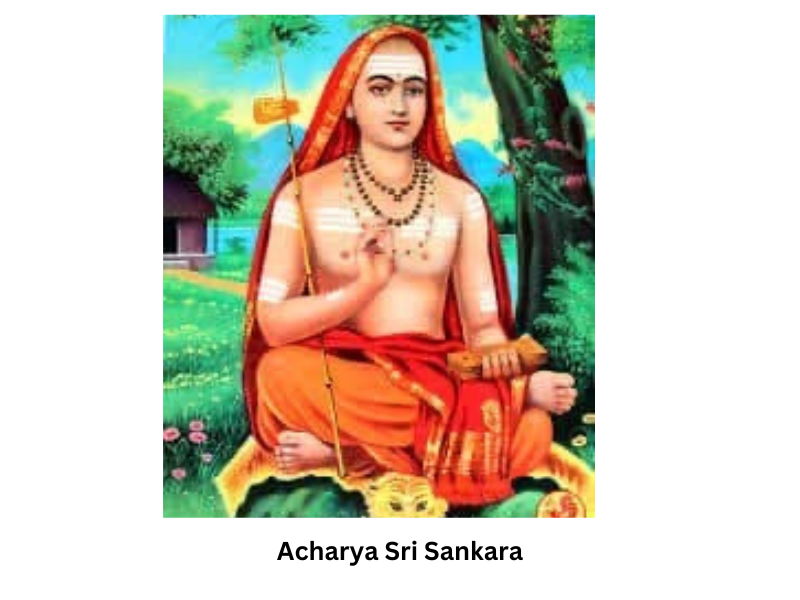
Great Indians from all over the country continued to visit the Narmadakhand in ancient, medieval as well as modern times. Sri Sankara, the great Acharya, who revitalised the Vedantic tradition in India and established the Dashanami system of Sanyasa walked 2000 km from his birth place in Kerala and met his Guru, Sri Govindapada in Omkareshwar, the sacred Jyotirlinga on an island in Narmada in present-day Khandwa district. Sri Sankara’s composition Narmada-Ashtakam (the eight verses on Narmada) are reciter by ascetic and commoners all over the Narmadakhand. He isalso said to have composed his famous ‘Nirvana Shatakam’ (having the refrain ‘Chidananda Roopam Shivoham Shivoham’).
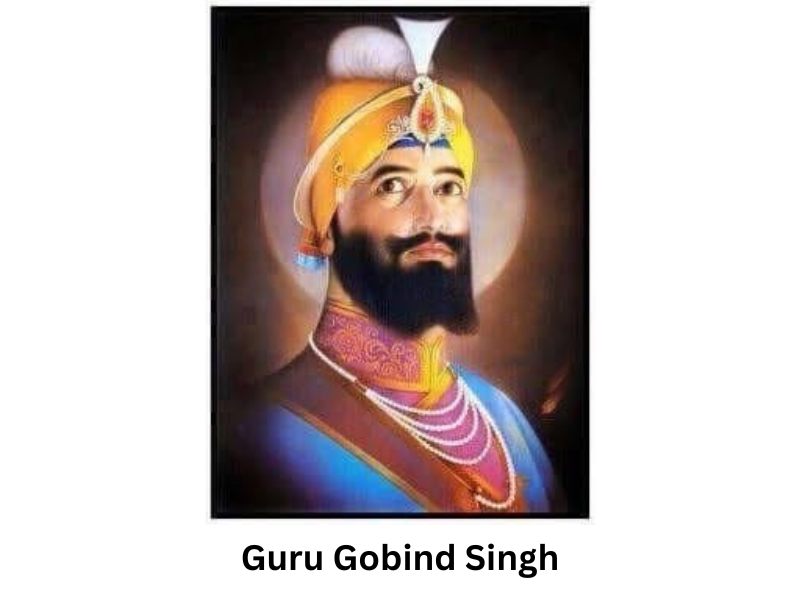
Guru Nanak, the first Guru of the Sikhs visited Omkareshwar three times and there is a Gurudwara in the place serving as a reminder of the Sikh connect with the Narmadakhand and indicating the greater idea of civilizational unity of India. Guru Govindsingh visited Indore, and crossed Narmada through Nemawar-Handia. He is supposed to have stayed at Handia. He had also passed through a small town of Kantaphod near the dense jungles in Dewas district on the northern bank and there is a temple where there are idols of Narmada Devi, Bajrang Bali, as well as that of Guru Govind Singh. A grand display-board outside the town declares itself as ‘Guru Govind Singh ki Nagari’ – ‘Town of Guru Govind Singh.’
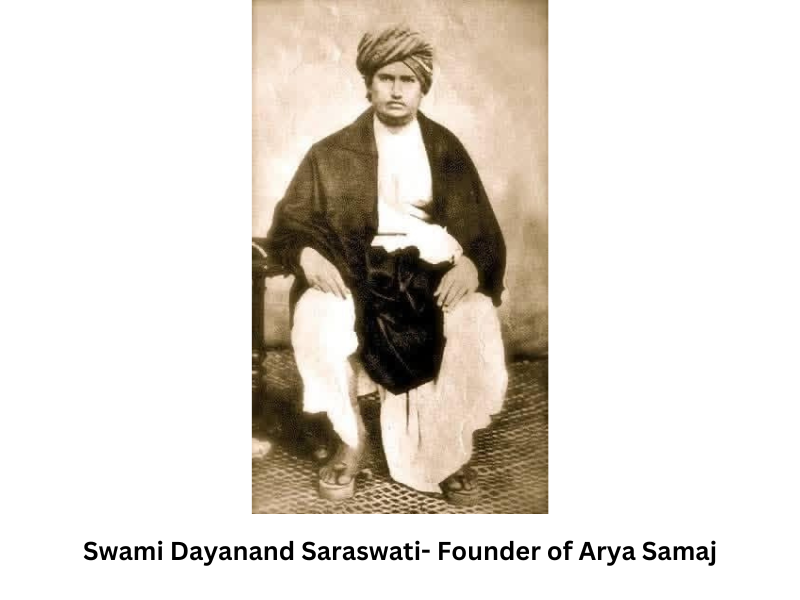
The nineteenth century also saw visits to Narmadakhand of eminent spiritual luminaries. Swami Dayananda Saraswati the founder of the Arya Samaj, is said to have spent four years in the region before meeting his Guru Swami Virajananda in Mathura. It is well documented that Swami Vivekananda visited Indore and Khandwa in 1892 during his Parivrajak days (days of travel and wandering across India) and crossed Narmada on the route. It looks quite unlikely that he would miss visiting Omkareshwar then, having reached so close though there is no documented evidence to confirm that. However, the Swami is likely to have crossed the whole of present-day Madhya Pradesh including large part of Narmadakhand during his train journey from Bombay to Howrah in December 1900 through Khandwa-Itarsi-Jabalpur-Mughalsarai route as that was the more common railroad between the two metropolitans then – the now shorter route connecting Mumbai and Calcutta through Nagpur-Bilaspur-Rourkela had just come up then. Several among Vivekananda’s Guru-Bhais (that is the disciples of Sri Ramakrishna Paramhansa) like Swami Brahmananda, Swami Shivananda, Swami Turiyananda, and Swami Subodhananda visited Omkareshwar. Swami Turiyananda had walked through large parts of Narmadakhand.
The Narmadakhand, thus, bears on its bosom the footprints of lofty spiritual seekers who inquired into the profound questions pertaining to meaning and purpose of human existence, and at the same time carries tales of humble folks suffering the grind of intolerable exploitation and sacrificing their lives in the cause of social justice. It has veritably been a great theatre where has been enacted human drama ranging from themes of struggles for survival to quests for salvation, engagement with questions of daily bread to lofty metaphysical speculations.
▶Next Chapter: The Eastern Narmadakhand : From Amarkantak to Bhedaghat